


Shopify store locator app helps you connect online visitors to your physical shops, showrooms, or pop-up locations. If you run a multi-location brand, this tool is essential for turning browsing visitors into in-store shoppers. In this guide, we break down the top Shopify store locator apps available in 2026 and help you choose the right one for your needs.
Can store locator apps integrate with other Shopify apps?
Most Shopify store locator apps integrate with other Shopify tools. Common integrations include email marketing platforms, POS systems for inventory sync, and analytics apps. When selecting an app, check the app directory for existing integrations with tools you already use to prevent duplication of work.
Essential Features of a Scalable Shopify Store Locator
When selecting a Shopify store locator, look for these features to make sure it holds up as your business grows:
- Google Sheets Integration: Manage locations in a spreadsheet instead of a complex dashboard. Add a row, update an address, or change store hours, and the locator reflects the change automatically.
- No-Code Setup: The app should install and run without requiring development work.
- Map-Provider Flexibility: Some apps use only Google Maps; others support Mapbox or multiple providers, so you can match your brand’s visual style.
- Search and Filters: Let customers search by city, zip code, store name, or hours, and filter by amenities, accessibility, or services to reduce bounce rates.
- Mobile and Desktop Optimization: Most location searches happen on mobile, so the locator needs to load quickly with clear buttons, readable text, and easy-to-use search fields.
- Speed and Performance: The locator loads on every page you embed it on, so a heavy app will slow down your whole site.
- Embedding Flexibility: You should be able to place the locator anywhere on your site, not just a single page, including themes, product pages, and newsletters.
- Data Export and Backup: Choose an app that lets you export your location data, so you’re not locked in if you switch platforms.
- Pricing Transparency: Look for clear monthly or pay-per-use pricing with no hidden fees, and the ability to scale up or down as your needs change.
Best 10 Shopify Store Locator Apps in 2026
Based on feature set, ease of use, and pricing, here are 10 of the best Shopify store locator apps for 2026:
1. LocateStore
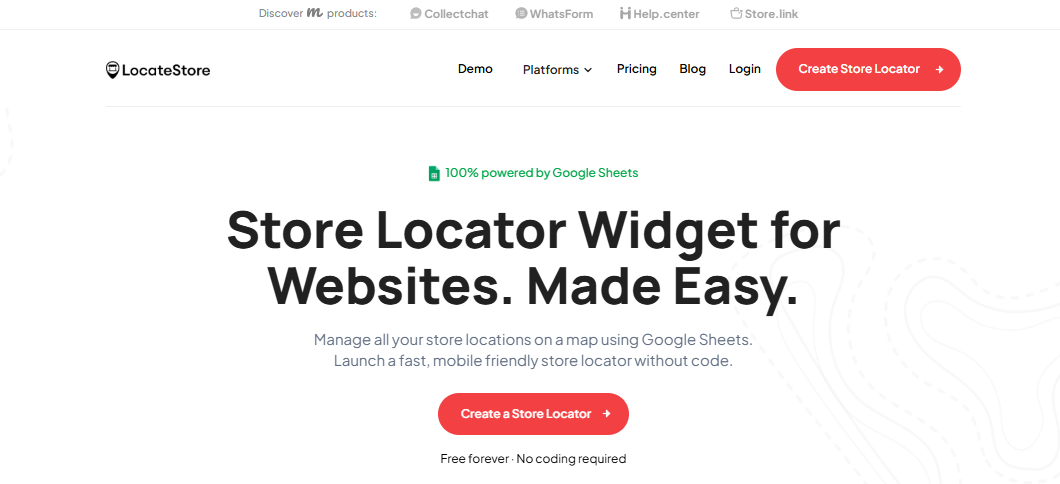
LocateStore is a powerful Shopify store locator app built on Google Sheets. LocateStore combines Google Sheets-based location management with Mapbox-powered maps, giving Shopify merchants a simple way to manage locations while providing customers with a fast and customizable store-finding experience. No coding required to launch a professional locator on your Shopify store. The app integrates with Google Sheets, making it easy to manage your store locations. You can add rows to your spreadsheet, and the widget updates automatically on your website.
The widget includes search and filters, directions to get customers to your store, and a mobile-friendly design. You can embed the locator directly into any page, add it as a site-wide floating widget that opens in a popup or modal from either bottom corner, or use LocateStore’s own shareable page as a standalone locator URL. LocateStore offers multiple Mapbox styles, custom location pins, and an image for each store.
Best for: Businesses that want unlimited locations on every plan, including free, and a locator that works the same way across Shopify and other platforms.
Drawback: Pricing scales with visits and searches, not location count. Free and Lite have fixed visit caps, while Standard lets you pick a higher fixed tier or turn on auto-upgrade, which adds 5,000 visits for $35 more per month each time you approach your limit, so a traffic spike never takes the locator down.
Key strengths:
- Google Sheets backend
- No coding required
- Easy Shopify integration
- Mobile-friendly and responsive
- Product locator functionality
- Mapbox maps (not Google Maps)
- Embed, floating widget, or standalone page deployment
2. TA MAPPY: Store Locator & Maps
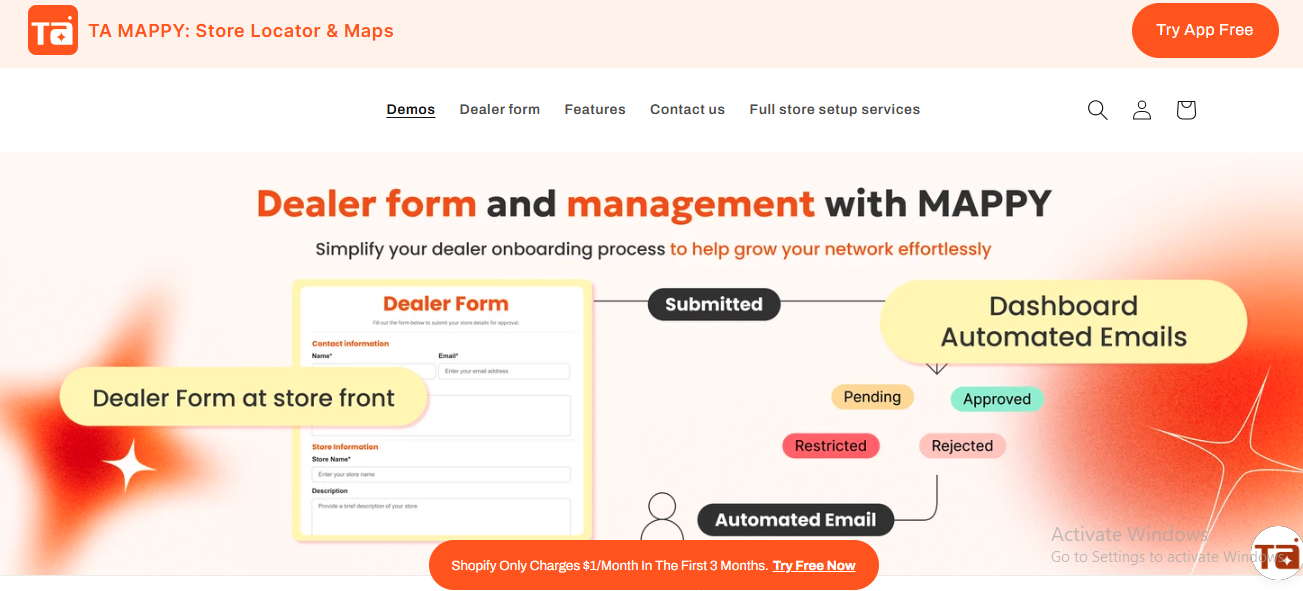
TA MAPPY is a built-for-Shopify app for stores, dealers, and stockists. You can add locations individually or in bulk via CSV, and customers can search and filter using tags you set up. The interactive map runs on OpenStreetMap or Google Maps, and a dealer registration form helps you grow your retail network, backed by built-in search analytics.
Best for: Shopify merchants who want dealer onboarding, strong customization, and a genuinely useful free plan.
Drawback: The free plan is capped at 2 locations, so most multi-location brands will need a paid tier.
Key strengths:
- Built for Shopify
- Bulk CSV import
- OpenStreetMap or Google Maps, no API key required
- Dealer registration form and search analytics
- Multi-language translation
3. Stockist Store Locator
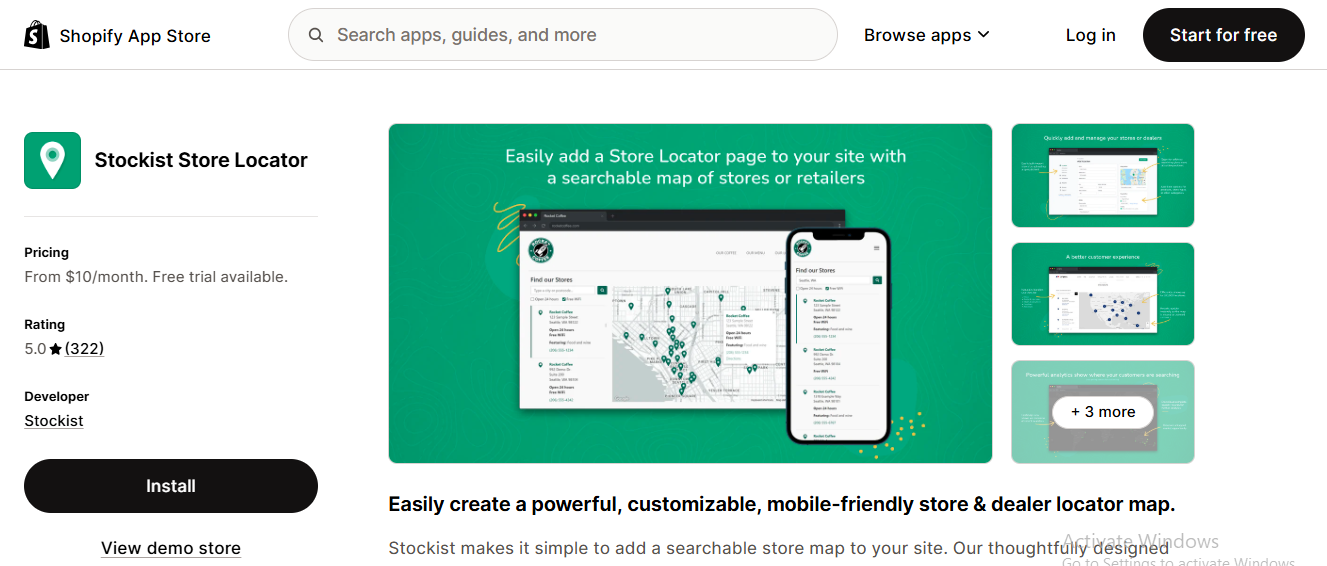
Stockist is a mature, Shopify-native locator built for brands that sell through retailers, dealers, or stockists. It supports individual entry, bulk spreadsheet import, or a live Google Sheets sync, along with geolocation search, custom filters, and translated labels for international storefronts.
Best for: Established retail and dealer networks that want dependable search and location analytics.
Drawback: Google Sheets sync and removal of Stockist’s own branding are both limited to its highest-priced plan.
Key strengths:
- Shopify-native integration
- Google Sheets sync (on higher plans)
- Geolocation and distance search
- Visitor heatmaps and search analytics
- Custom filters and translations
4. Way: Google Maps Store Locator
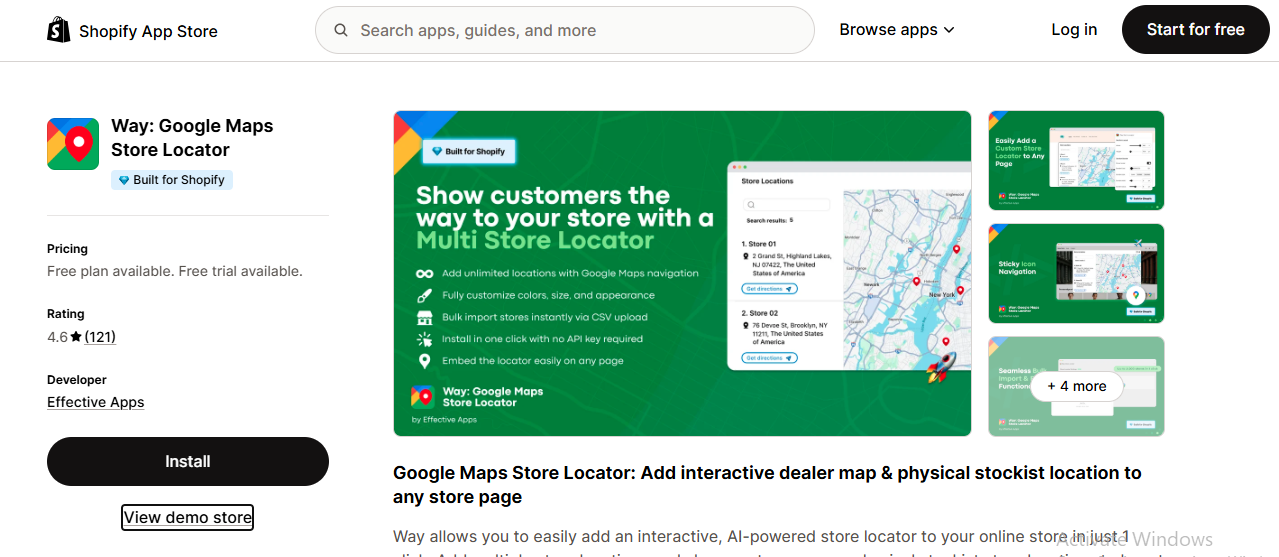
Way is a Built for Shopify app that adds a floating store locator widget or an in-page app block to your storefront in one click. It handles bulk CSV import, custom CSS, store images and contact details, and turn-by-turn directions through Google Maps, all without needing a separate API key.
Best for: Smaller Shopify stores that want a simple, fast, native installation.
Drawback: Search and filtering are lighter than apps built for complex dealer networks, and the free plan covers only one location.
Key strengths:
- Built for Shopify
- One-click floating widget and app block
- Bulk CSV import and export
- Full custom CSS control
- No API key required
5. Progus Store Locator Map
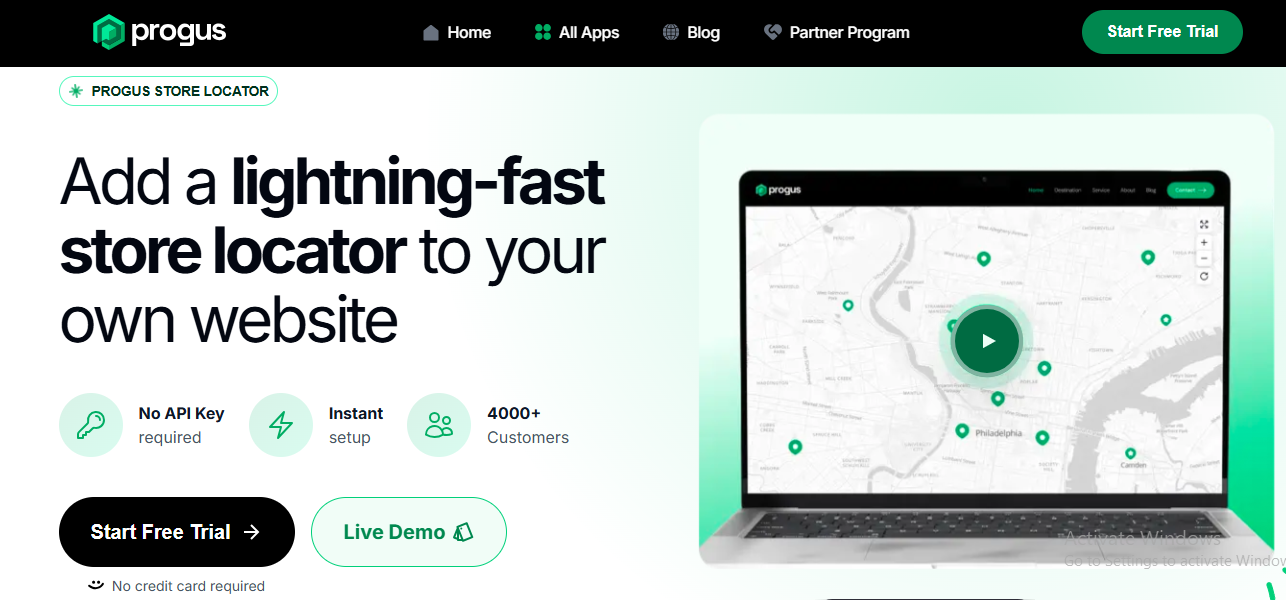
Progus is a Built for Shopify locator built around helping customers find not just a store, but the specific product they’re after. It syncs with Google Sheets and Shopify Locations, supports bulk import and dealer registration forms, and includes analytics and heatmaps to show where demand is coming from.
Best for: Brands where product availability by location is central to the buying decision.
Drawback: Product-to-location linking and on-map product search are reserved for its top-tier plan.
Key strengths:
- Built for Shopify
- Product-to-location linking
- Google Sheets and Shopify Locations sync
- Dealer registration form
- Analytics and heatmaps, no API key required
6. Storemapper Store Locator Map
Storemapper is one of the longest-running store locator apps on Shopify, built for brands managing larger networks of retailers, dealers, and distributors. It supports CSV bulk management alongside Google Drive, Google Sheets, and Google Business Profile sync, plus autocomplete search, custom fields, and built-in analytics.
Best for: Larger retailer, dealer, and distributor networks that need several import and sync options.
Drawback: Costs more than most competitors once you move beyond a single location.
Key strengths:
- Google Drive, Google Sheets, and Google Business Profile sync
- Autocomplete search and custom filters
- Built-in analytics
- Custom CSS and branding
- Long track record, live since 2013
7. S: Store Locator
S: Store Locator is a Built for Shopify app that lets customers search by product, location, or distance across several map styles and layouts. It includes a dealer registration form, translation support, custom CSS, and bulk import for larger location lists.
Best for: Merchants who want layout flexibility and dealer applications in the same app.
Drawback: The free plan supports only one location, so most stores will need to upgrade quickly.
Key strengths:
- Built for Shopify
- Search by product, location, or distance
- Multiple map styles and layouts
- Dealer registration form
- Heatmaps and analytics
8. RP ProMap: Store Locator
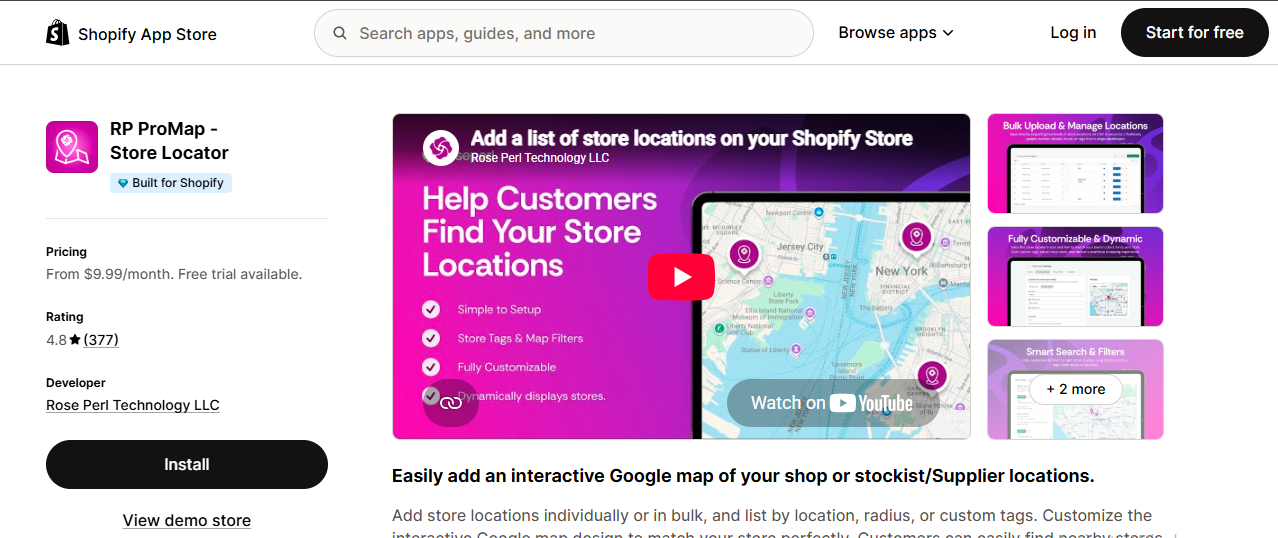
RP ProMap is a Google Maps-based locator built for dealer and stockist networks that need multilingual presentation. It supports custom tags, map styling, custom pins and images, bulk CSV import, and built-in directions.
Best for: Dealer networks that need multilingual presentation and custom tag filtering.
Drawback: There is no permanent free plan, only a free trial.
Key strengths:
- Translation into 25+ languages
- Custom tags and detailed store fields
- Bulk CSV import
- Analytics dashboard
- Built-in directions
9. Mapstore: Store Locator Map
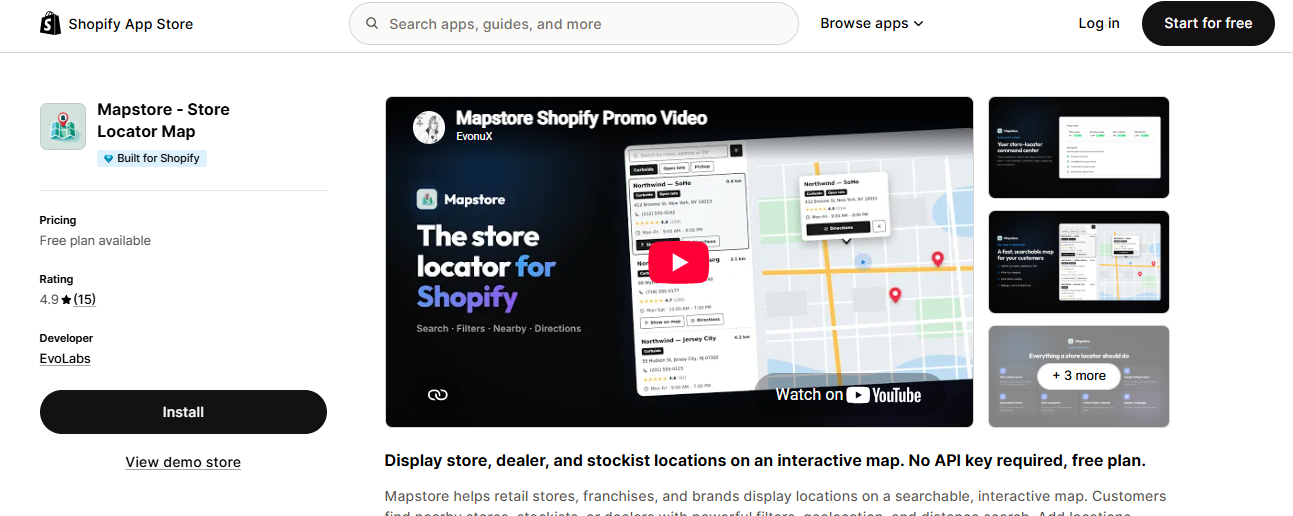
Mapstore is a Built for Shopify app that syncs locations from Google Sheets or CSV, with geolocation and distance search, custom filters, and a lead-generation form builder. It’s a newer entrant to the category but already has a genuinely useful free tier.
Best for: Shopify stores that want Google Sheets sync and a usable free plan for a handful of locations.
Drawback: Newer to the market than long-running apps such as Stockist or RP ProMap.
Key strengths:
- Built for Shopify
- Google Sheets and CSV sync
- Lead generation form builder
- Geolocation and distance search
- No API key required
10. Omnium Maps
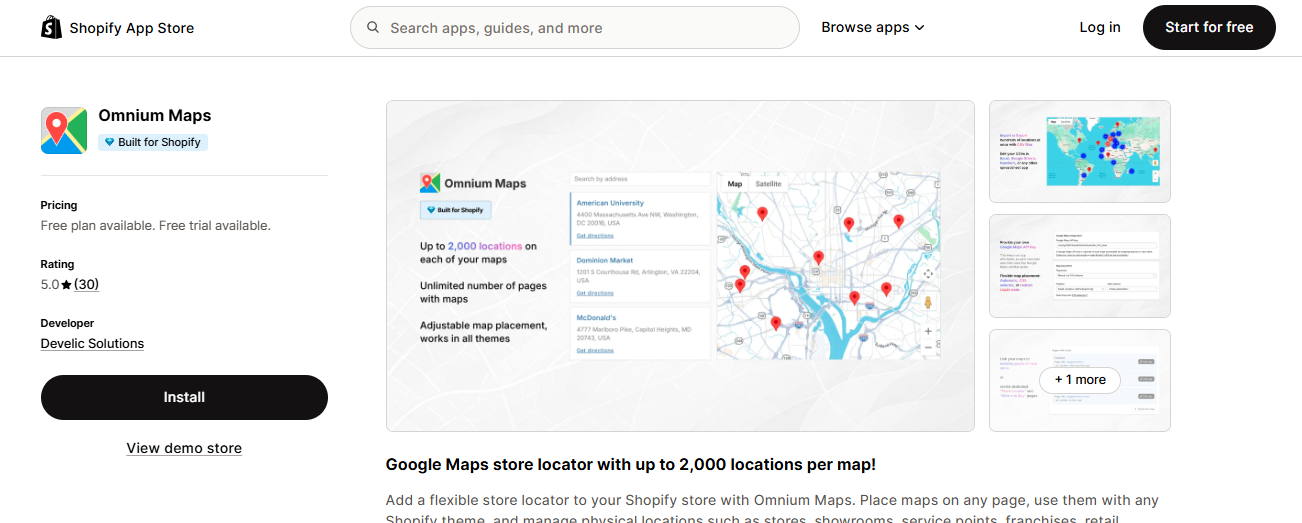
Omnium Maps is a built-for-Shopify Google Maps locator built for merchants who want a high location allowance at a low monthly cost. It supports unlimited maps at one map per page, up to 2,000 locations per map, with CSV import and export, automatic geocoding, and a handful of visual themes.
Best for: Merchants who need a low-cost Google Maps locator with a generous per-map location limit.
Drawback: The app is English-only, and its free access is limited to Shopify development stores rather than live merchant accounts.
Key strengths:
- Built for Shopify
- Up to 2,000 locations per map
- CSV import and export with automatic geocoding
- Multiple visual themes and custom CSS
- Low starting price
Detailed Comparison Table
Which Store Locator App Should You Choose?
Choose LocateStore if you want no coding, easy Google Sheets management, mobile-friendly design, and a locator that works the same way across Shopify, WordPress, Webflow, and other platforms.
Choose TA MAPPY or Way if you want a genuinely free, no-code starting point and a fast, native Shopify installation.
Choose Progus or S: Store Locator if you want customers to search by product as well as by location.
Choose Stockist or Mapstore if you want a Google Sheets-driven workflow on a Shopify-native app.
Choose Storemapper or RP ProMap if you’re managing a larger dealer or distributor network and need multiple sync options or multilingual support.
Choose Omnium Maps if a low monthly cost and a high per-map location limit matter more than advanced filtering or multilingual support.
FAQs
What features should a scalable Shopify store locator include?
High-quality locators handle real-time updates, load quickly on both mobile and desktop, can be embedded anywhere on your site, export location data for backup, and include filters for city, zip code, and specific needs. These features ensure your locator grows with your business.
How does LocateStore handle map customization?
LocateStore uses Mapbox instead of Google Maps, giving you more control over your map’s look. You can choose from multiple map styles, upload a custom location pin, and add an image for each store, all without needing custom development work.
Can I manage locations across multiple stores?
Yes, most Shopify store locator apps let you manage locations across multiple stores. LocateStore, Stockist, Progus, and Mapstore support Google Sheets integration. Add or update locations in one spreadsheet, and the changes sync to your locator.
Which store locator app should I choose?
For most brands looking for simplicity and no coding, LocateStore stands out with its Google Sheets backend, Mapbox maps, and free tier. Shopify beginners might prefer TA MAPPY or Way for their official Built for Shopify status and genuinely free starting points. Larger multi-location retailers with dealer or distributor networks may want Storemapper or RP ProMap. Choose based on your technical comfort, budget, and feature requirements.